How Tuscany Keeps Its Mushroom Woods Full
A guest post exploring how mushroom foraging is governed in Italy, by Stefano Gabryel, a hiking guide and photographer based in Tuscany, with a long-standing passion for mycology. Stefano guides private hikes and mushroom hunting experiences in the hills of northern Tuscany, and writes about the region’s trails, forests and fungi at stefanogabryel.net.
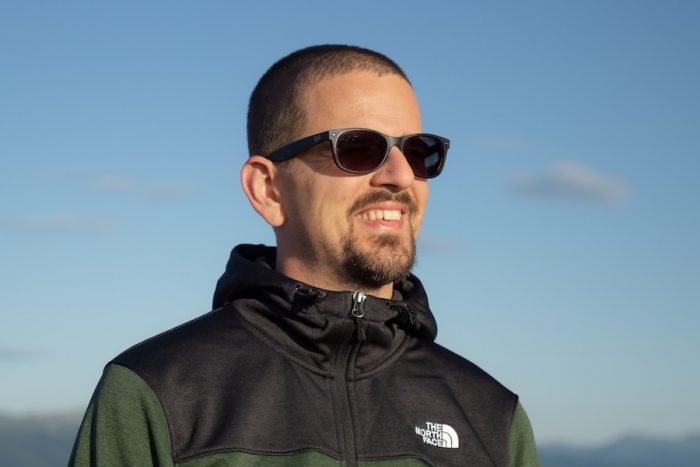
Stefano Gabryel
Every autumn the woods around Lucca fill with people carrying wicker baskets, and nobody finds this remarkable. Anywhere near mountains in Italy, mushroom foraging has always been part of how families live through autumn, handed down like a recipe. So the debate about whether wild food should be picked at all never really happened here. The question Italy answered instead, decades ago and in law, is how much, when, and under whose eyes.
The entry ticket
Here’s what it takes to forage legally in Tuscany: €25 a year, paid to the region, and the receipt in your pocket. That’s the entire entry ticket for a resident. Visitors from other regions or from abroad pay more, €15 for a single day or €40 for a week, which is a quiet way of telling people to pick their own woods first and keep the pressure off ours. And in your own town the rules loosen rather than tighten: often a higher daily limit, sometimes no tax at all.
Some Italian regions add a “corso propedeutico” to the paperwork, a short course with no exam that walks new foragers through the prized local species and the ways each one can be confused with something that puts you in hospital. Nobody fails it, because failing people was never the point; it exists to keep beginners out of the emergency room. Tuscany doesn’t require the course, though I’d tell anyone starting out to sit one anyway. Selling mushrooms is a different matter, a separate licence with a proper exam, and I hold one, but honestly anyone with a bit of real passion for fungi can get there.
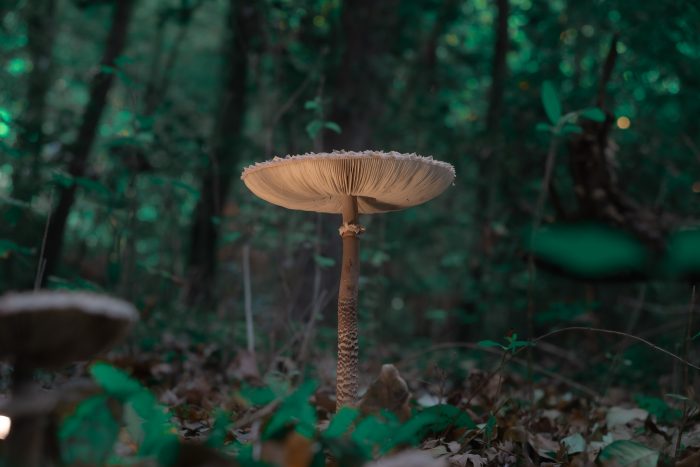
Parasol mushroom. Image ©Stefano Gabryel
Rules with a purpose you can see
The limits are where the system shows its intent. Three kilograms per person per day, nearly everywhere in Italy. Collecting is allowed from one hour before sunrise to one hour after sunset, and night picking is banned outright. Even the container is regulated: in Tuscany your mushrooms must travel in a rigid, open basket, and the reason has nothing to do with tradition. An open weave lets spores fall as you walk, so the forest gets reseeded by the very mushrooms leaving it. Some days the woods are closed to foraging altogether, weekdays and weekends both, so the forest gets breathing time between waves of baskets. None of this is decorative. The Carabinieri’s forest units patrol the productive valleys in season, and being caught over the limit means a fine and watching your excess mushrooms taken away. With fresh porcini selling above €33 a kilogram here, the temptation to strip a good slope is real, and the rules exist precisely because it is.
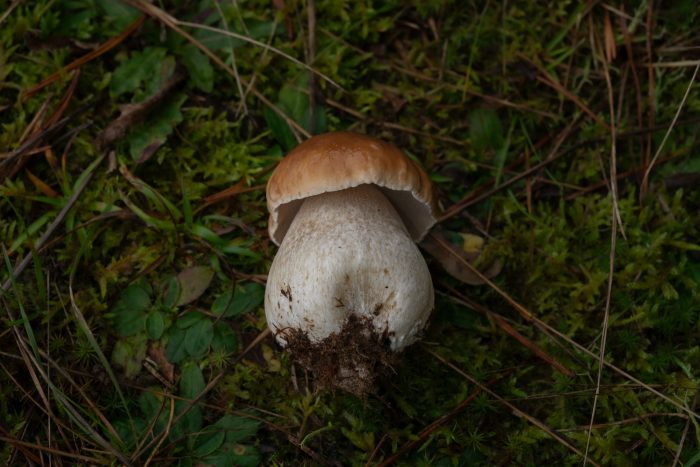
Porcini. ©Stefano Gabryel
A hierarchy of prizes
Every foraging culture ranks its species, and the Tuscan ranking is rigid. Porcini come first, always and without argument; a Tuscan who says “funghi” with no qualifier usually means porcini and nothing else. At home they go into tagliatelle, over polenta, into risotto, and whatever the kitchen can’t absorb fresh gets dried for the months when the woods give nothing. Chanterelles get picked with pleasure too, but they sit firmly in second place. And saffron milkcaps carpet some of our pinewoods and mostly stay where they grow, because outside mycological circles hardly anyone here knows them.
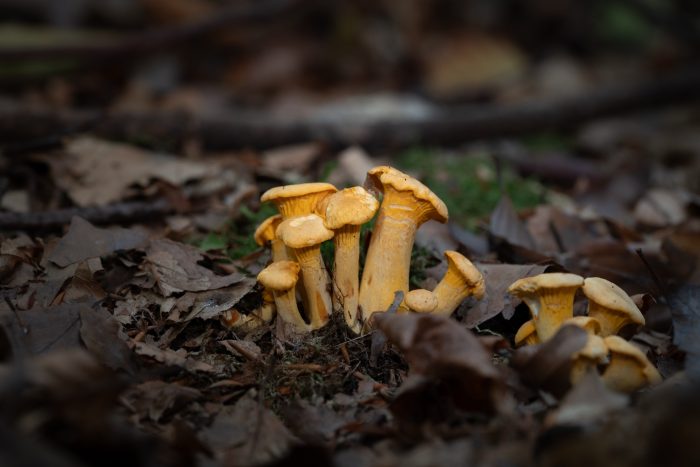
Chanterelles. ©Stefano Gabryel
Cross a border and the ranking rearranges itself. In Spain that same milkcap is the níscalo, one of the country’s best-loved mushrooms, filling market stalls every autumn. In Sweden and Norway the order flips outright: chanterelles are the forest’s gold there, while porcini, growing in the same woods, draw far less devotion. Swedes and Norwegians on my hikes have confirmed this more than once, usually while looking mildly offended on the chanterelle’s behalf. Austria never built a strong porcini culture either, and every summer carloads of Italians drive north to fill their boots in Carinthian woods; the Austrians answered with a limit of 2 kilograms a day, stricter than ours, and picking hours narrower than ours too.
The egg you’re not allowed to pick
Above all of them, in a category of its own, sits the ovolo buono, Caesar’s mushroom. It’s the most prized fungus we have, gourmet, scarce and difficult to find. I’ve heard of prices up to €70 a kilogram, roughly double porcini, though I’ve no direct experience of that trade myself. It’s traditionally eaten raw, sliced thin as a carpaccio with olive oil and shaved Parmigiano; the flavour is so delicate that I prefer mine with olive oil alone.
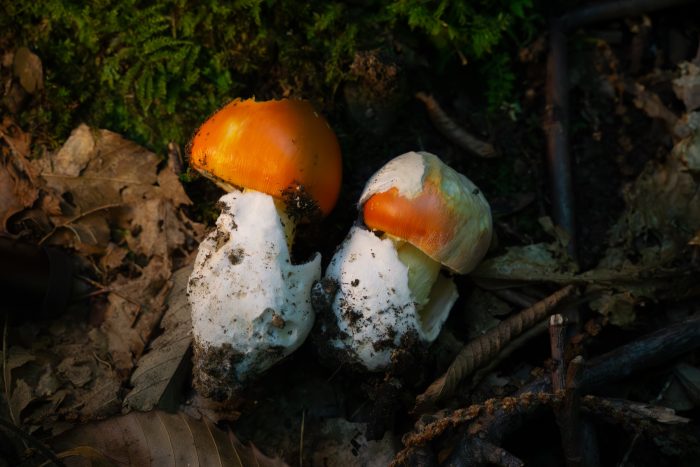
Caesars mushroom. ©Stefano Gabryel
Our strangest law protects it. Picking an ovolo in its closed egg stage is forbidden. Partly that’s about over harvesting, but mostly it’s blunt safety: a closed Caesar’s egg is nearly indistinguishable in the field from the egg of a death cap. Slice one open lengthwise and the yolk-yellow cap inside gives the game away. Misjudge it, and that’s a story you don’t get to tell. The rule looks eccentric until you see the logic; then it looks like the rest of Italian mushroom law, unromantic and practical.
When nobody is sure
When a basket comes home with doubt in it, we don’t ask the internet. Every local health authority in Italy runs a free mushroom inspection desk, the ispettorato micologico, where a public mycologist goes through your haul species by species, pulls out anything wrong and certifies what’s left as safe to eat. The same offices advise hospital emergency rooms when a poisoning does come in. It costs nothing, and every year it catches mistakes before they become casualties.
Those authorities also decide what counts as food, and their lists sometimes overrule tradition. Clouded agaric, which Italians ate for generations, is now officially non-edible here and banned from sale. An older mycologist I know insists the old families had a way of preparing it that removed the toxins completely. He refused to share it with me. Twice.
And more than one mycologist has told me that in corners of Calabria the fly agaric has its own traditional preparation and gets eaten regularly, something unheard of in Tuscany.
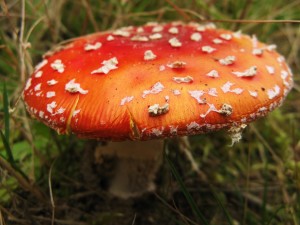
Fly Agaric – A .Muscaria. ©GallowayWildFoods
Full baskets, full woods
Tuscany runs from coastal pinewoods at sea level to Apennine beech forest at altitude, so our season can open as early as June and hold out into November, far wider than most of Europe gets. Through all those months the picking is heavy, and it has been for generations. Yet the woods are still full.
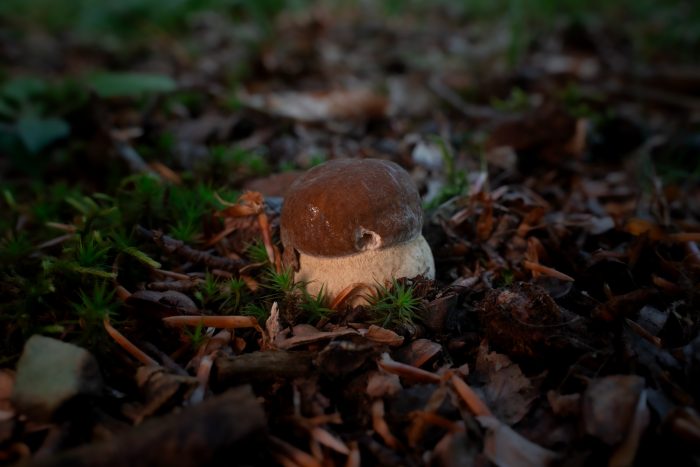
Porcini. ©Stefano Gabryel
Read more perspectives on foraging and fungi:
- What might foraging accreditiation look like in the UK?
- Psychology, Mycology, and the Anti-Foraging Paradox, By a Polish forager/mycologist/psychologist.
- Foraging Bans in the UK
- Foraging in 1950’s Russia
- The Politics of Foraging
1 Comment
Thanks for contributing this fascinating perspective Stefano.
In the UK there is much debate (and resistance) around state control of foraging. Much of the resistance comes due to a lack of evidence that it is either helpful or necessary. I wonder whether the Italian approach arose from a sense of “social fairness” – ie. everyone gets an equal chance pick domestic quantities – or for conservation reasons? If the latter, I would love to see any research or evidence that gave rise to it.
In the UK – historically mycophobic, but catching up fast now – the areas that seem to come under more pressure to impose restrictions tend, not surprisingly, to be near large population centres, but without any evidence or research to suggest that the extra picking reduces future fruiting or species diversity. In fact all the significant studies suggest that it makes no difference – see here for a list of the key research.
I’m curious as to how the notion of “over-picking” is measured (both historically and nowadays) in Italy. In Natalia’s blog she notes “Białowieża, on the Polish–Belarusian border, is widely regarded as one of Europe’s richest fungal hotspots, with thousands of species recorded and many more expected. It sits in a country where mushroom picking is practically a national sport, and has been for centuries. Heavy, normal, everyday foraging – and yet off-the-scale fungal diversity”.
In Scotland we have vast plantations of sitka spruce in which millions of tons of porcini grow and rot (very quickly in our damp climate!) every year, so any sort of restriction here would seem extremely heavy handed and unneccessary!
More research required I think…
I smiled when reading your section on caesar’s mushroom. Many year’s ago I briefly worked for a Scottish based wild food supply company that imported some of it’s mushrooms. On receiving a large delivery of caesar’s mushrooms in the egg stage, my colleague and I noticed one specimen that looked slightly different from the rest – nothing obvious, just a vibe that it was somehow different, even when we sliced it open. We sent it away for DNA sequencing, and the results came back – Amanita phalloides – the death cap! A near miss for some poor unsuspecting diner in a fancy restaurant. There is no way anyone further down the supply line would have noticed it. We stopped importing them at that stage!
Anyway, thanks again for your fascinating insight into the Italian mushrooming scene.
Mark.