Trooping Funnel – Identification, Edibility, Cooking, Sustainable Harvesting, Distribution
December 18, 2014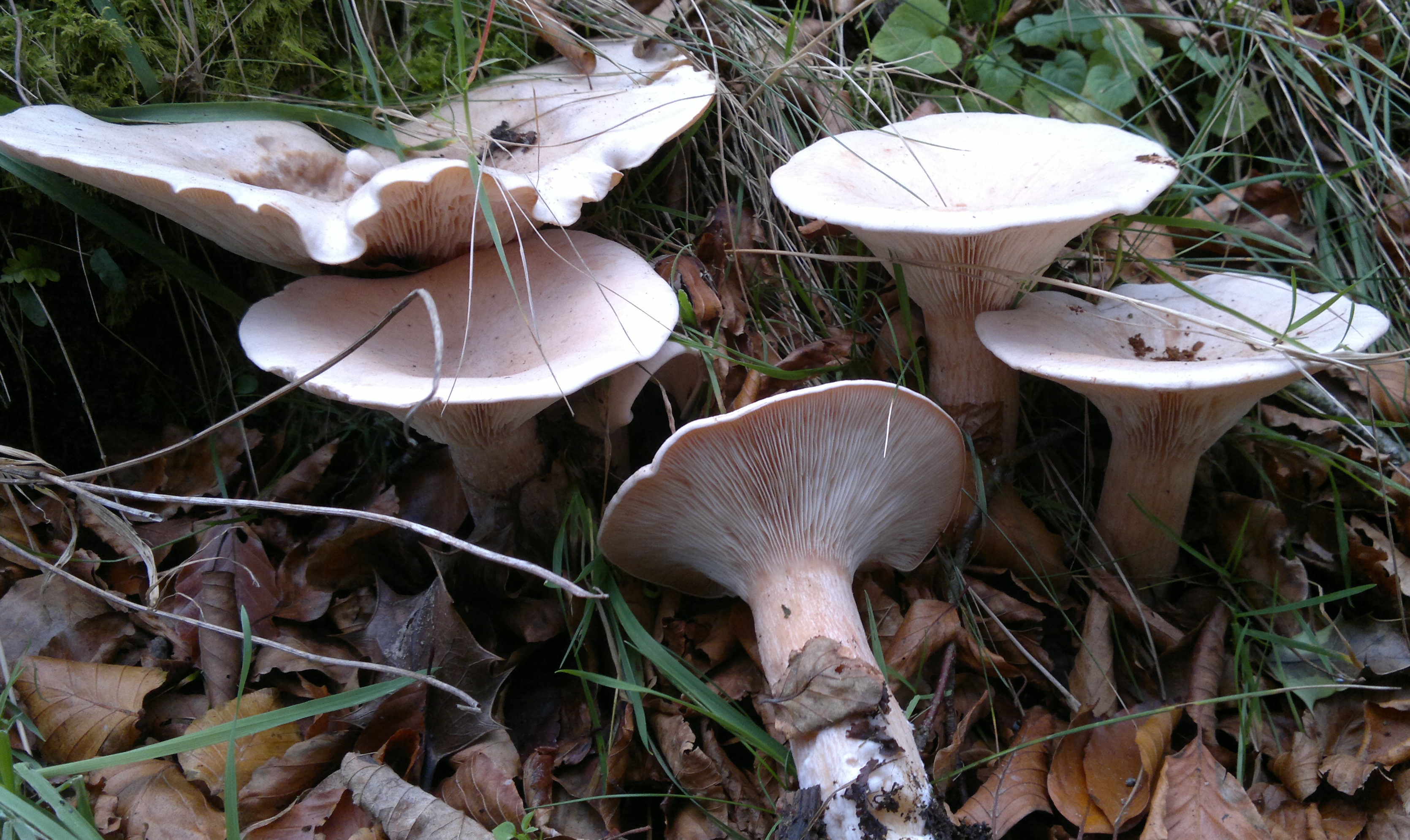
Large, distinctive, common and delicious, these mushrooms tick every box for the novice forager.
Large, distinctive, common and delicious, these mushrooms tick every box for the novice forager.
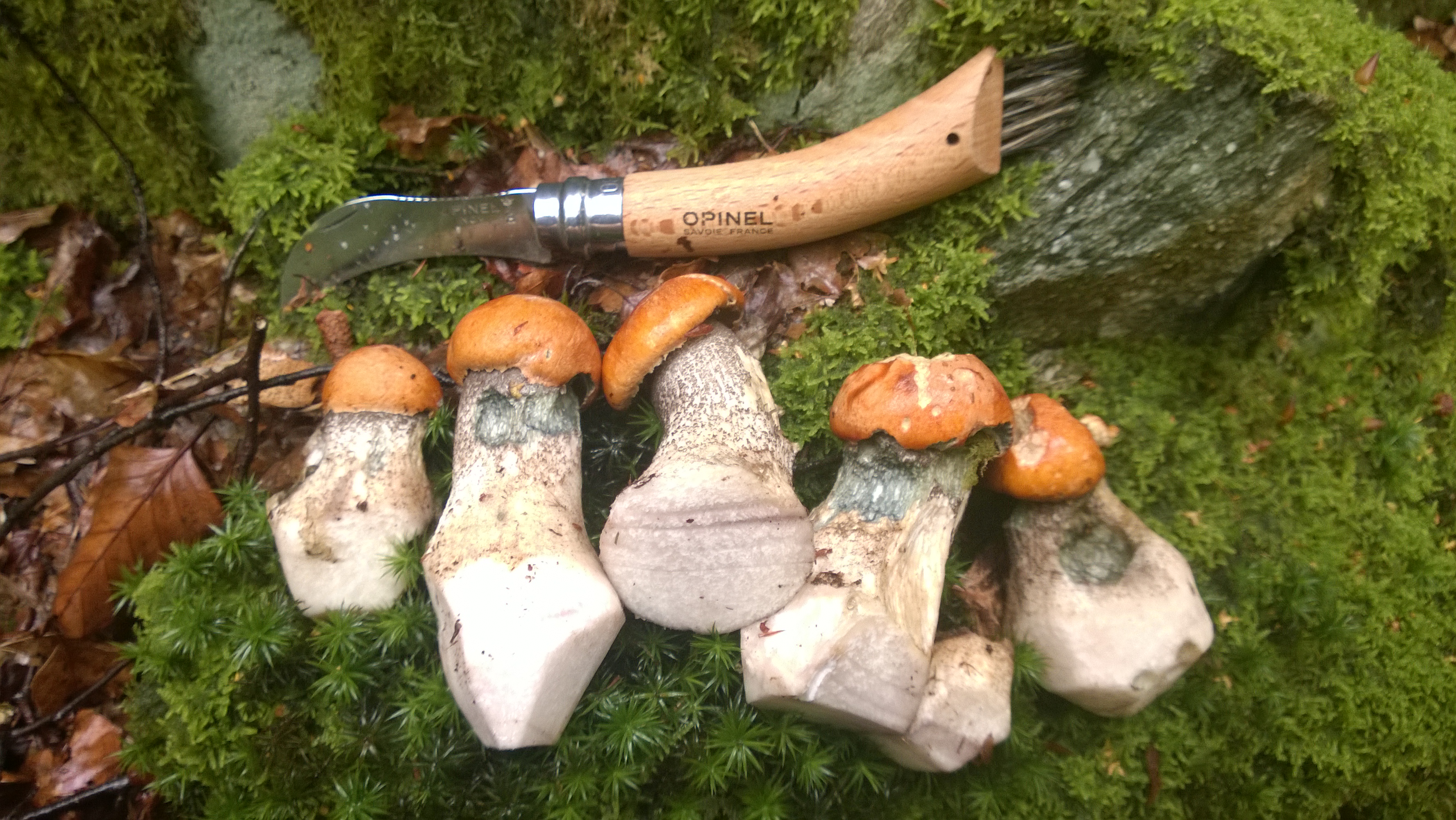
Orange birch boletes far exceed their more common brethren, the brown birch bolete (leccinum scabrum), in texture and flavour. Both are common only under birch trees. Info also on orange oak and orange aspen boletes
The brittlegill (russula) family of mushrooms are notoriously hard to tell apart. Novices should not be put off however, as there are no terrifyingly toxic brittle gills, and the charcoal burner is common, easily identified and tasty. A great beginner’s brittle gill!
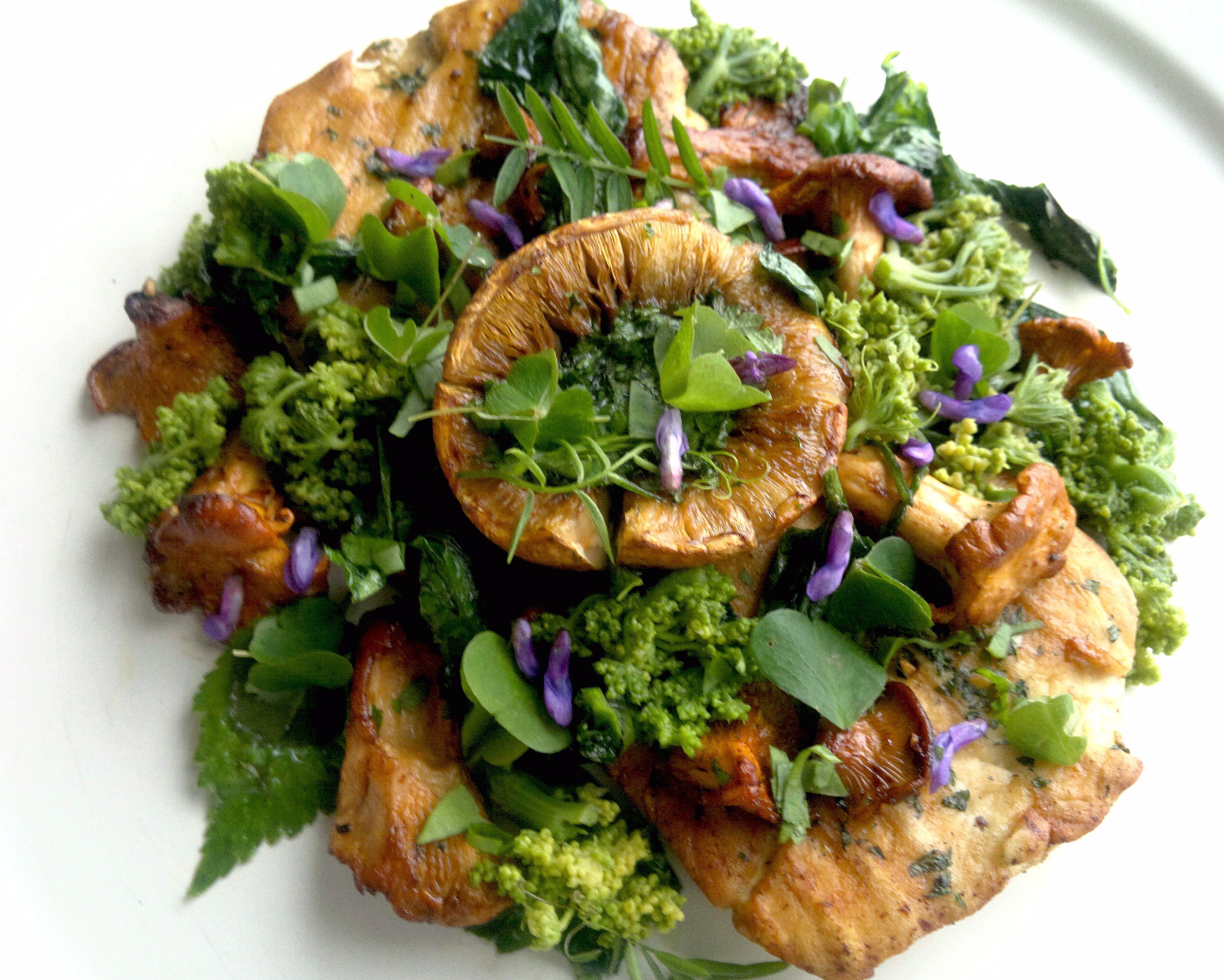
I love it when seasons – and their flavours – overlap. During July sweet cicely leaves are still about and beautifully echo the aniseed notes of horse mushrooms. This gorgeous wee plate takes 15 minutes to knock up…

Neoboletus luridiformis, previously known as boletus luridiformis and boletus erythropus. Aka Red foot bolete, dotted stemmed bolete Edibility – 4/5 – Firm and flavoursome. Almost as good as a cep and less likely to be maggoty. Should always be well cooked – mildly toxic raw. Identification – 4 /5- A solid bolete with a 4 – 12cm velvety tan […]